
One of the reasons I was happy to come back to India was to be able to catch a lot of my favorite Indian cultural programs. My preferred city for this would have been Delhi or Mumbai or Chennai. So, I planned at that time that I would have to plan weekends in different cities to be able to catch the different types of concerts and performances. I would spend the Margazhi season in Chennai. I would catch Kathak in Delhi or perhaps Lucknow. I would travel to Kerala on Friday mornings or Thursday nights, catch the Koodiyattam or Kathakali performance over the weekend and fly back. I would go for the Khajuraho festival, Konark festival, see Odissi performances in Delhi, Bhuvaneshwar or perhaps even in Bangalore. So many different plans and then we moved to India directly into the lockdown.
What we did not anticipate was how life would change in this aspect thanks to Coronavirus – a whole lot of new life went from physical to virtual.
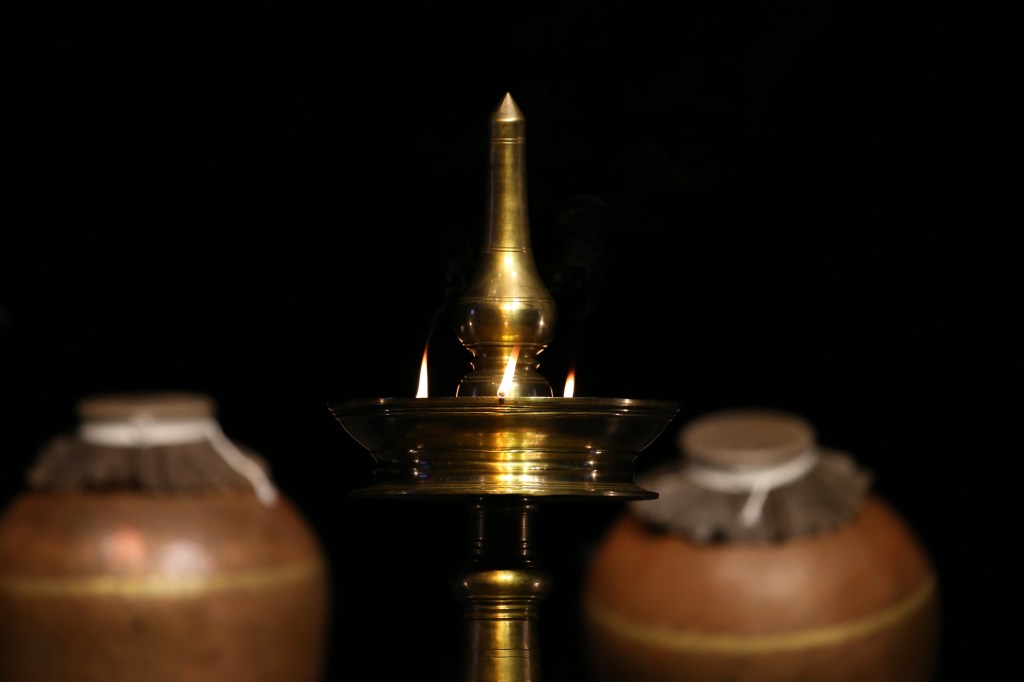
It all started with NCPA releasing their archives one by one for a short period of time. I also started following Sahapedia more closely to understand the work of folk artists from different parts of India.
Later, I started following other artists as well. Every Sunday evening, Nepathya Center of Excellence, one of the Koodiyattam Centers of Excellence, does a long performance of Koodiyattam, Prabhandha Koothu or Chakyar Koothu. I would normally not have been able to attend all of them and this enables me to see most of the performances.
Similarly, Margi Theatre started the Introduction to Koodiyattam, a series of lecture demonstrations on Koodiyattam. Currently at the 99-th session of the short 10-15 minutes sessions, it is easily consumable and one can take it in small breaks.
Sangeet Natak Academy, the national academy of music, dance and drama, brings artists from different parts of the country for concerts, performances or lecture demonstrations twice or thrice a day. I started watching it when the Kathak lecture demonstrations started. I was not yet working full time, I could tailor my day as I wanted and I made sure to accommodate a few sessions in the week that I could follow. Just last week, they brought in Nepathya for 3 hours a day session over 5 days about Koodiyattam. While I could not catch any of it live, the facebook live enables you to relive the experience later as well. The latest one was the interview of Dr. Kapila Vatsyayan who I had heard about as a child and whose books I read later on.
Another artist who I love to follow has been Arushi Mudgal. I have enjoyed her posts on her Odissi performances, her experiments, her practices though I still enjoy her aunt Madhavi Mudgal Ji’s dances with even more pleasure for the grace and the traditional format. Both have the same style but different types of choreography that really brings out the grace in Odissi even as it explores the versatality. My favorite performance of Arushi Mudgal has been this practice session though as I wrote this, I found at least another 10 of her practice or performance pieces that I go back to often when I want to perk myself up. From the same family, Sawani Mudgal‘s instagram, brings a very different Indian culture to the world – the culture of music, Hindustani as well as a fusion of modern with Hindustani and her folk songs. I wait for her to release her videos for my twilight music. I am hoping she will release a full album of hindustani classical.
As more and more artists start putting their work online, I find new artists. One is Bijayini Satpathy who is an inspiration on how perfection can work. The contours, the angles and the grace makes the beauty of the dance stand out even in minimal costume. One of the groups is Raadhakalpa, a more modern interpretation. While not all choreographies are my favorite, I still enjoy seeing a very different interpretation here.
There are days when I look at the search on my instagram and think that the world has only dancers and saree connoisseurs.
Finally, no Indian culture will be complete without the music from film world. Closer to home, I have been very lucky to hear my father sing live performances. He has now got the hobby to put together songs on the anniversaries of different singers. He tells a story about them and puts up different songs accompanied by the stories. I really enjoy the way he puts that together.
He started it all with Malayalam drama songs over two different days, followed by Mitrah’s live.
He, then followed it with the Mohammed Rafi songs. I grew up listening to those songs, thanks to my father’s admiration for Mohammed Rafi.
- Suhaani Raat
- Hum Bekhudi mein
- Dekhe zamaane ki yaari
- Saathi na koi Manzil
- Chaudvin Ka Chand
- Ehsan Tera Hoga
- Chahoonga Mein Tuhje
- Din Dhal Jaaye
- Bahaaron Phool Barsao
- Jo guzar rahi hain mujhpar
I was surprised when he followed it up with Kishore Kumar songs
- Dukhi Mann mere
- Geet Gaata Hoon
- Diye Jalte Hain
- Badi Sooni Sooni
- Chingari Koi Bhadke
- Koi Humdum Na Raha
- Woh Shaam
- Kuchh To Log Kahenge
- Hum Hai Rahi Pyar Ke
- Meri bheegi bheegi si
and others (K P Brahmanandan – Priyamullavale, Manathe Kayalil, a full program on Mukesh, his tribute to my grandmother, Chain se humko kabhi for Asha Bhonsle, the song for Janmashtami).
Thinking about all these, I think these lock down times have only intensified my cultural journey from around the world. So far all have been restricted to Indian artists. I hope I can soon catch up on the Western Classical and other concerts as well.
 Life of P(ay)i
Following the footsteps of your grandfather ………
LikeLike